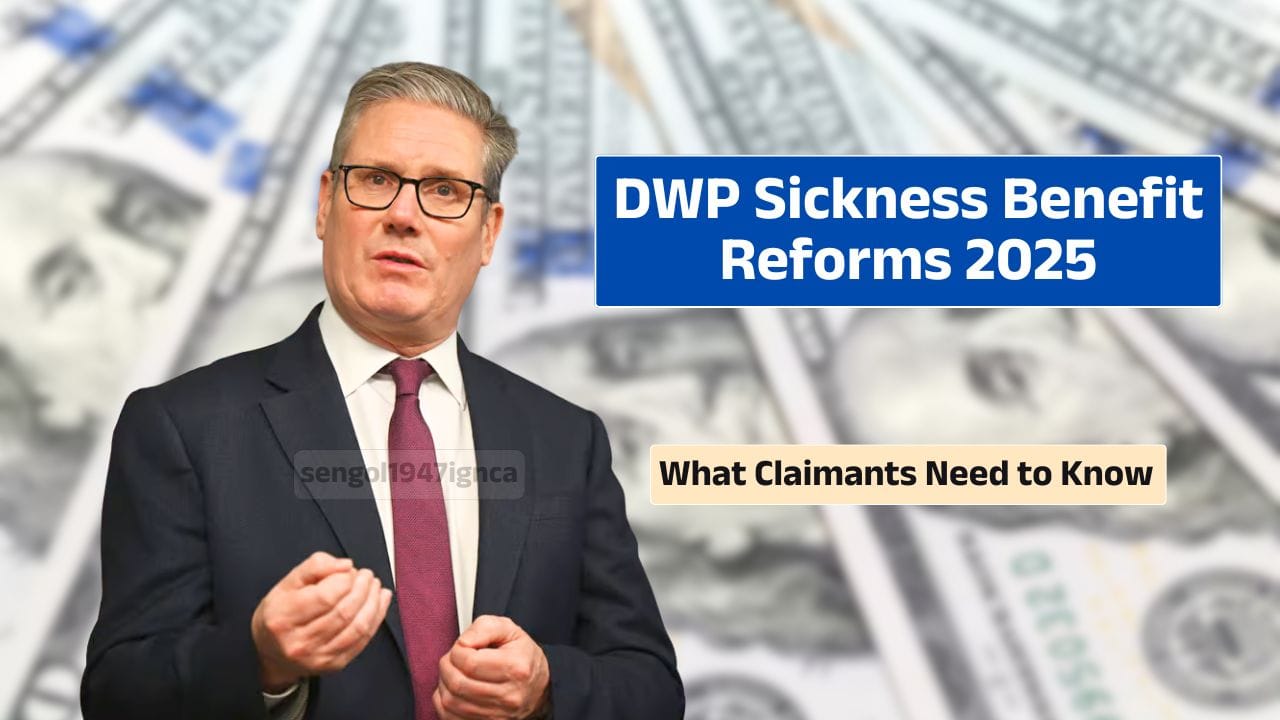
The Department for Work and Pensions (DWP) is introducing major welfare reforms in 2025 that will reshape how sickness benefits are handled across the UK. Around 1.3 million people are expected to be reassessed under stricter rules, with many facing reduced financial aid or new requirements to seek work.
While the government argues these reforms will cut costs and encourage employment, critics warn that disabled individuals could lose up to £5,000 a year, worsening financial hardship. Let’s break down what’s changing, who will be affected, and what steps claimants should take.
Details
Here’s a snapshot of the new sickness benefit plan for 2025:

| Aspect | Details |
|---|---|
| People Affected | 1.3 million sickness benefit claimants |
| Main Change | Stricter Work Capability Assessments (WCA) |
| Financial Impact | Up to £5,000 annual loss for some disabled claimants |
| Gov’t Goal | Reduce welfare spending by £3bn (£1.3bn from disability benefits) |
| Sick Pay Guarantee | 80% of wages from day one for low-income workers |
| Extra Support | Training programs, mental health services, workplace accommodations |
| Employers | Incentives for hiring reassessed claimants; higher sick pay obligations |
| Next Steps | Seek advice, review eligibility, prepare for reassessments |
Assessments
The WCA is used to decide whether someone is fit for work or entitled to sickness benefits. In 2025, the criteria will become tougher:
- More claimants may be classified as “fit for some work.”
- Those with mental health conditions could find it harder to prove eligibility.
- People with chronic illnesses or mobility impairments may face reassessment.
Consequences: Some claimants could lose benefits entirely, while others will receive less support and be required to look for work.
Risks
The reforms are expected to reduce disability benefits by £1.3 billion annually. Critics warn this could:

- Push more disabled individuals into financial hardship.
- Increase stress, worsening both mental and physical health.
- Place greater demand on charities and local councils for emergency aid.
For individuals who already struggle with limited income, a reduction of up to £5,000 a year could have life-changing consequences.
Guarantee
One positive development is the new sick pay guarantee:
- Low-income workers will now receive 80% of wages from the first day of sickness.
- Previously, anyone earning under £123 per week was excluded from Statutory Sick Pay (SSP).
- The reform expands access to part-time, temporary, and low-wage workers, giving them more financial security when ill.
This policy is expected to benefit around 1.3 million workers.

Employers
Businesses will also feel the impact:
- Wider sick pay eligibility could raise payroll costs.
- Incentives are being introduced for companies that hire reassessed claimants.
- While some employers support the focus on returning people to work, others fear the financial strain of expanded sick pay obligations.
Reactions
Public response has been deeply divided.
Supporters say:
- Encouraging people back to work reduces long-term welfare dependency.
- Increasing the workforce strengthens the economy.
- The sick pay guarantee is a step forward for low-income workers.
Critics argue:
- Disabled people risk losing vital financial support.
- Mental health issues may be undervalued in stricter assessments.
- Cuts could increase poverty and homelessness among vulnerable groups.
Some disability rights groups are even preparing legal challenges, claiming the reforms may breach human rights protections.
Actions
If you currently receive sickness benefits, here’s how to prepare:
Stay Informed – Monitor DWP announcements for updates.
Seek Advice – Contact Citizens Advice, welfare charities, or legal aid services.
Gather Evidence – Keep medical records and GP notes updated.
Look into Support – Look into job training or mental health programs.
Advocate – Join disability rights campaigns to push back against unfair changes.
The DWP’s sickness benefit reforms in 2025 are among the most significant welfare changes in recent years. For some, they may provide new work opportunities and sick pay protection.
For others, especially disabled claimants, they represent a serious financial risk. Staying prepared and seeking support is the best way to navigate the uncertainty ahead.
FAQs
Who will be reassessed in 2025?
Around 1.3 million sickness benefit claimants.
How much could claimants lose?
Some may lose up to £5,000 annually.
What is the new sick pay rule?
Low-income workers get 80% of wages from day one.
Who benefits from sick pay reform?
Part-time, temporary, and low-wage workers.
What should claimants do now?
Review eligibility, gather medical proof, seek advice.