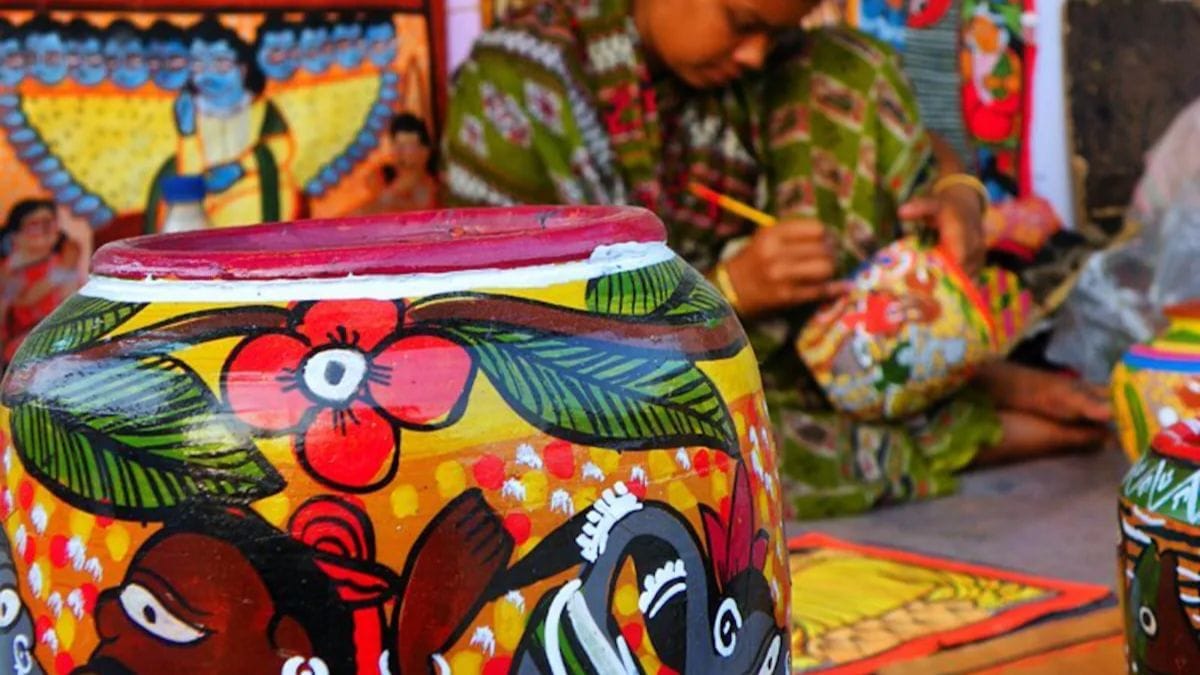
India’s heritage isn’t just preserved in museums or textbooks — it’s alive in the hands of its artisans. Indian handicrafts are more than just decorative items; they are stories told through thread, clay, wood, and metal. For centuries, these crafts have sustained local communities, reflected cultural identity, and showcased the country’s unmatched creativity. In a rapidly modernizing world, these handmade traditions remain a beautiful contradiction — timeless, yet evolving.
Origins
The roots of Indian handicrafts date back to the Indus Valley Civilization, where evidence of pottery, weaving, and metalwork has been found. Since then, crafts have grown with India’s history — shaped by royal patronage, regional influences, and religious practices. Every state has its own signature style, passed down through generations like treasured family secrets.
From Madhubani paintings of Bihar to the mirror work of Gujarat, each craft form carries a distinct local flavor. These are not just art pieces — they’re expressions of community, geography, and heritage.

Diversity
The diversity of Indian handicrafts is simply mind-blowing. There’s Channapatna toys from Karnataka, blue pottery from Jaipur, Pattachitra paintings from Odisha, and Kantha embroidery from Bengal. The techniques, materials, and motifs vary widely depending on the region.
Here’s a quick look at some well-known handicrafts from across India:
| Region | Famous Handicrafts |
|---|---|
| Rajasthan | Blue Pottery, Bandhani, Puppets |
| Gujarat | Rogan Art, Patola Sarees |
| West Bengal | Kantha Stitch, Terracotta |
| Odisha | Pattachitra, Applique Work |
| Kashmir | Pashmina Shawls, Papier-Mâché |
| Tamil Nadu | Tanjore Paintings, Bronze Statues |
| Uttar Pradesh | Chikankari Embroidery, Zardozi |
Each of these reflects the skills and values of the people who make them. It’s creativity with a purpose — every stitch or brushstroke carries tradition.
Livelihood
Handicrafts aren’t just beautiful — they are a major source of income for millions. In rural areas, entire families work together to produce these items. It’s often their primary source of livelihood, especially for women and older artisans who rely on their skills more than formal education.
Cottage industries help reduce migration to cities by providing local employment. They support sustainable development and contribute to India’s economy — both domestically and through exports. But beyond the money, it gives artisans dignity, identity, and pride.
Challenges
Despite their importance, Indian handicrafts face some serious threats. Machine-made products, changing fashion trends, and lack of market access make it hard for artisans to compete. Many younger generations are choosing other careers, leaving age-old traditions behind.
Middlemen often take a big chunk of the profits, leaving the creators underpaid. Lack of branding, exposure, and innovation further limits their reach. It’s a quiet crisis — one that needs urgent attention if we’re to preserve these traditions.
Revival
Luckily, things are changing. E-commerce platforms, NGOs, and government initiatives are helping bridge the gap between artisans and buyers. Events like craft fairs, exhibitions, and tourism have brought renewed attention to handmade products.
Some designers are now collaborating with artisans to blend traditional techniques with modern styles — creating products that appeal to global audiences without losing authenticity. Social media has also become a powerful tool for artisans to showcase their work and tell their stories.
Preserving Indian handicrafts isn’t just about saving art — it’s about keeping alive the soul of a culture. Every purchase, every appreciation of handmade work, is a vote for tradition, sustainability, and human connection in a world that’s increasingly digital.
FAQs
What are Indian handicrafts?
They are handmade items reflecting India’s culture and tradition.
Why are handicrafts important?
They preserve heritage and provide income to rural artisans.
Which state is famous for blue pottery?
Rajasthan is well-known for its blue pottery work.
What is Chikankari embroidery?
It’s a hand embroidery style from Uttar Pradesh.
How can we support artisans?
Buy handmade, attend craft fairs, and support online platforms.