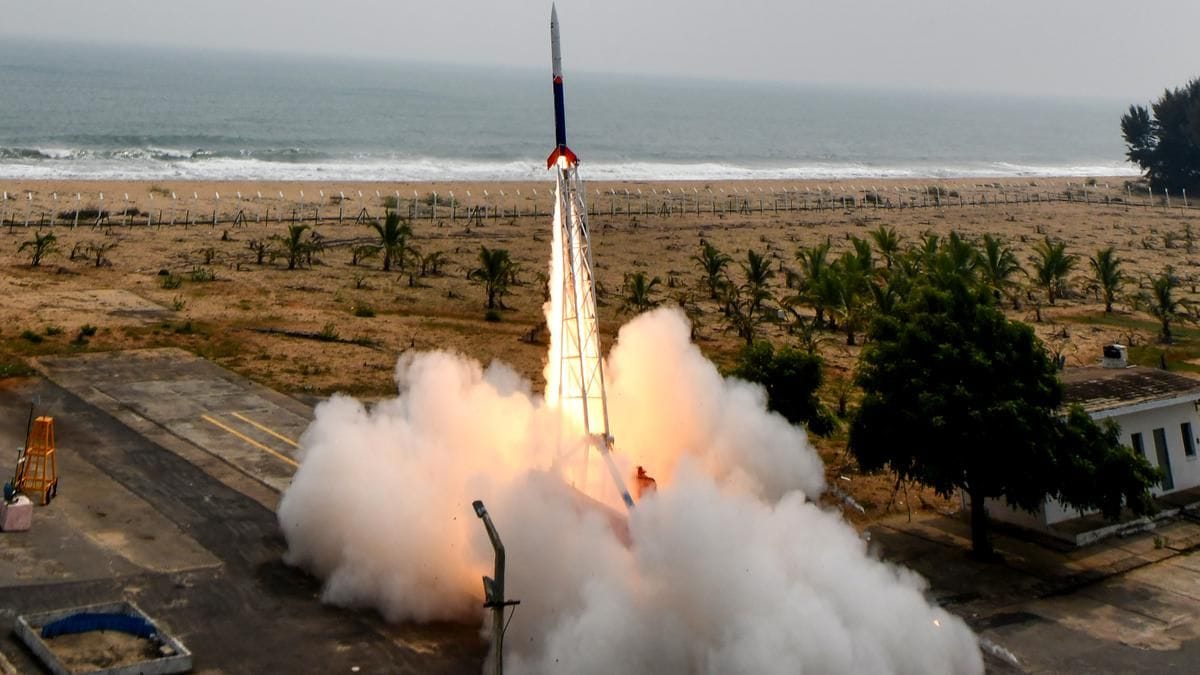
India’s space journey has always sparked national pride—from launching satellites on shoestring budgets to reaching the Moon and Mars. But here’s the twist: it’s no longer just about ISRO. The space economy in India is now opening up to private companies, startups, and innovators, and the shift is massive.
If you thought rockets were just for government agencies, think again. Private players are now building satellites, launching rockets, and even aiming for space tourism. Let’s cut into how India’s space economy is evolving and what the rise of private players really means.
Evolution
India’s space efforts date back to the 1960s, with ISRO (Indian Space Research Organisation) leading the charge. For decades, it was a government-only domain. ISRO handled everything—building satellites, launching missions, and developing indigenous space technology.

But as global space economies boomed—with private giants like SpaceX and Blue Origin leading the charge—India couldn’t afford to be left behind. The turning point came in 2020 when the government announced reforms to allow private sector participation in space activities. That single decision unlocked an entire industry.
Reforms
The game-changer? The creation of IN-SPACe (Indian National Space Promotion and Authorization Center). This body acts as a bridge between ISRO and private companies, helping startups access ISRO’s infrastructure, tech, and expertise.
These reforms mean private players can now:

- Build and launch their own rockets and satellites
- Offer satellite-based services like imaging, internet, and GPS
- Collaborate with ISRO for R&D, launches, and data
This is not just policy talk—it’s action on the ground. Dozens of companies are already onboard, and India’s space ecosystem is buzzing with new energy.
Startups
One of the most exciting developments? The rise of space startups.
From Bengaluru to Hyderabad, new-age companies are aiming for the stars—literally. Some key players include:

| Company | Focus Area | Milestone |
|---|---|---|
| Skyroot | Launch vehicles | Launched India’s first private rocket |
| Agnikul Cosmos | Custom satellite launch systems | Developing small, 3D-printed rockets |
| Pixxel | Satellite imaging and analytics | Building a global Earth-imaging network |
| Dhruva Space | Satellite platforms and deployment | Deploying satellites for global clients |
These startups are lean, tech-driven, and ambitious. And with ISRO’s support and funding from both Indian and global investors, they’re moving fast.
Economy
So how big is this market? Huge—and growing fast.
As of 2023, India’s space economy was valued at around $8 billion. Experts predict it could hit $44 billion by 2033, thanks to a mix of satellite communication, navigation, Earth observation, and launch services.
Here’s a quick snapshot:
| Segment | Share of Market | Growth Driver |
|---|---|---|
| Satellite services | 45% | Communication, GPS, imaging |
| Launch services | 25% | Global satellite demand |
| Ground equipment | 20% | Antennas, tracking, receivers |
| Other applications | 10% | Space tourism, data analytics |
India’s cost-effective space missions are also a magnet for international clients. After all, why pay $100 million to launch a satellite when India can do it for a fraction?
Challenges
Of course, it’s not all smooth sailing.
- Regulatory clarity is still evolving, and many startups face delays in getting approvals.
- Funding is another hurdle—space tech isn’t cheap, and venture capitalists are cautious.
- Infrastructure needs are huge, from testing facilities to launch pads.
- And then there’s talent—India needs more trained scientists and engineers in this niche field.
But the direction is clear, and the momentum is strong.
Future
The sky is no longer the limit.
With government backing, global interest, and local innovation, India’s space economy is poised for takeoff. Space tourism, asteroid mining, interplanetary exploration—it might sound like science fiction now, but so did landing on Mars a few years ago.
Private players are turning what was once a government monopoly into a thriving, competitive industry. If you’re a student, investor, techie, or dreamer—there’s a place for you in India’s new space race.
So next time you look up at the stars, remember—someone in Bengaluru might already be building the rocket to get there.
FAQs
What is IN-SPACe?
It’s a government body that helps private companies work with ISRO.
Can startups launch rockets in India?
Yes, private startups can now build and launch rockets.
What is India’s space economy worth?
It’s around $8 billion and could grow to $44 billion by 2033.
Who are India’s top space startups?
Skyroot, Agnikul, Pixxel, and Dhruva Space lead the market.
Is space tourism coming to India?
It’s in the early stages but could become real in the future.