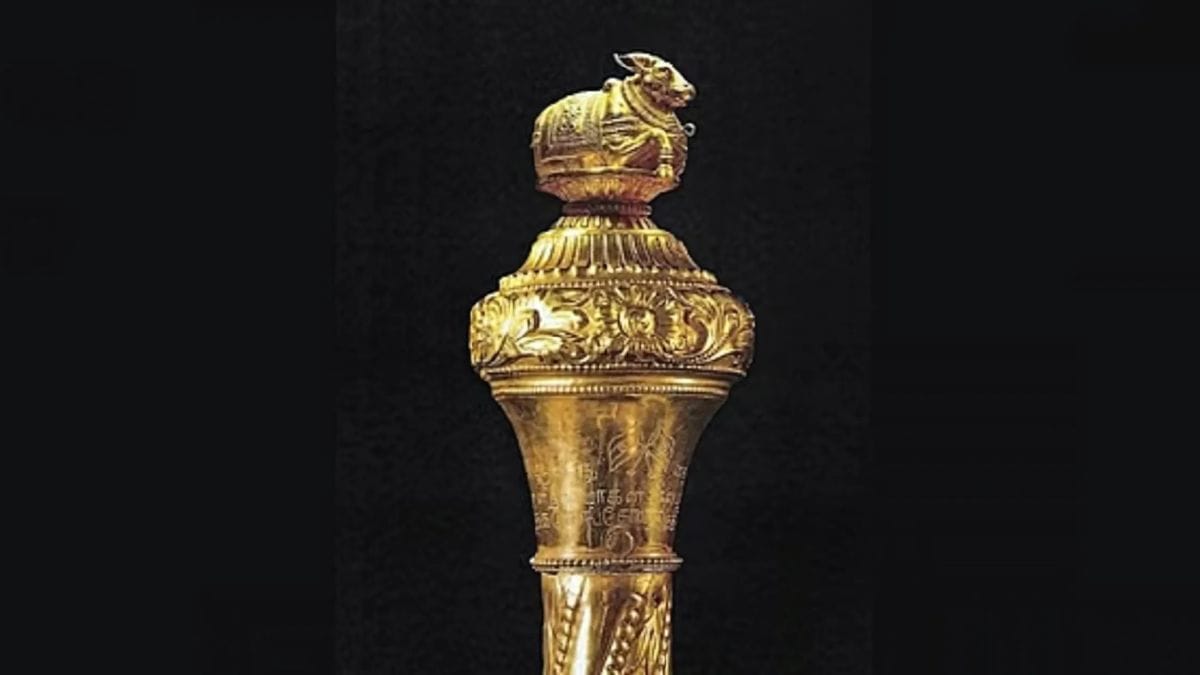
When we think of India’s independence in 1947, images of the midnight speech by Jawaharlal Nehru or the lowering of the British flag come to mind. But hidden behind these grand moments lies a powerful symbol—the Sengol. A sacred sceptre with deep cultural roots, the Sengol was handed over as a mark of India’s transfer of power from the British to Indian hands. This story remained buried in history books for decades but is now resurfacing as a proud reminder of India’s civilizational legacy.
Origins
The Sengol comes from the Tamil word “semmai,” which means righteousness. It was traditionally used by South Indian kings, particularly in the Chola dynasty, as a sign of just and ethical governance. This golden sceptre wasn’t just a decorative item—it symbolized the moral responsibility of a ruler to govern fairly and wisely.
When the British agreed to leave India, Indian leaders and scholars, including C. Rajagopalachari, suggested reviving this tradition. It was proposed that the transfer of power should not only be political but also symbolic. And that’s where the Sengol came in.

Moment
On the night of August 14, 1947, a ceremonial handover took place. Priests from Tamil Nadu were invited to perform a ritual where the Sengol was handed over to Jawaharlal Nehru. This act marked the passing of dharma, or righteous rule, from the British to the newly formed Indian government.
Nehru accepted the Sengol as a symbol of responsibility and duty. The ceremony was held in the presence of key leaders and was steeped in ancient tradition. But surprisingly, this event didn’t find much space in our history textbooks later on.
Neglect
For decades after independence, the Sengol was kept away from the public eye. It was reportedly stored in a museum in Allahabad (now Prayagraj), labeled simply as a “golden walking stick.” Hardly anyone outside academic or religious circles knew its significance.

This neglect was symbolic too—it showed how deeply colonial narratives had overshadowed native traditions and symbols. The story of the Sengol was lost, until recent efforts aimed to bring it back into the national conversation.
Rediscovery
In recent years, interest in the Sengol has grown, especially among historians and cultural researchers. The government took steps to highlight its importance. In May 2023, the Sengol was moved to the new Parliament building in New Delhi. It now stands near the Speaker’s chair, a powerful reminder of India’s ancient wisdom and democratic spirit.
This act was not just ceremonial. It was a conscious attempt to reclaim India’s civilizational past and give due credit to indigenous traditions that go beyond colonial timelines.

Legacy
What makes the Sengol stand out is its connection between tradition and governance. It bridges the spiritual with the political. It’s not just a symbol—it’s a call to leaders to act with fairness, honesty, and responsibility.
India has thousands of years of governance traditions that predate colonial rule. The Sengol is a tangible piece of that heritage. By bringing it back into national consciousness, India is reconnecting with a legacy of ethical leadership and spiritual values.
Relevance
Why does the Sengol matter today? Because symbols shape national identity. While modern governance runs on laws and institutions, cultural symbols like the Sengol remind us why those systems exist—to serve people justly.
In an age where politics can often lose sight of purpose, the Sengol stands tall—both literally and metaphorically—as a timeless symbol of duty-bound leadership. It reminds leaders and citizens alike that power comes with responsibility.
India’s tryst with destiny wasn’t just about taking charge—it was about doing it the right way. And the Sengol is the golden thread that ties that vision together.
FAQs
What is the Sengol?
The Sengol is a golden sceptre symbolizing righteous rule in India.
When was the Sengol handed to Nehru?
On August 14, 1947, during a midnight ceremony.
Where was the Sengol kept post-independence?
It was stored in a museum in Prayagraj as a walking stick.
Where is the Sengol now?
It is displayed in the new Indian Parliament building.
Why is the Sengol important today?
It connects governance with India’s ancient moral values.