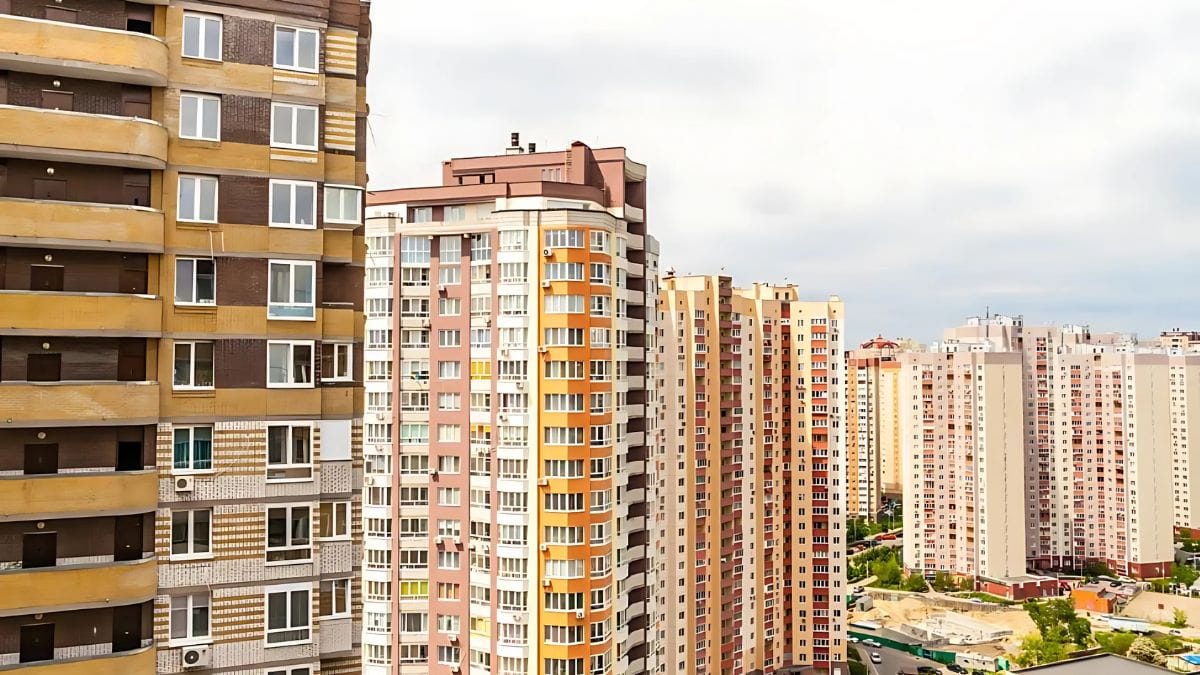
Affordable housing has always been one of India’s biggest challenges, especially for low-income families living in urban and rural areas. That’s where the Pradhan Mantri Awas Yojana (PMAY) comes in. Launched in 2015, this flagship scheme aims to provide “Housing for All” by 2025. Now that we’ve hit 2025, the program is in a crucial phase. So, what’s new? Let’s break down the latest updates and reforms under PMAY in 2025.
Goals
The original target of PMAY was to construct over 2.95 crore pucca houses for the poor by 2025. As of now, over 2.5 crore houses have already been sanctioned and nearly 2.2 crore are completed. That’s a massive milestone, but there’s still work to do.
In 2025, the government has extended the mission to reach the remaining beneficiaries. The aim is to ensure that no one is left without a roof over their head, especially in rural and backward regions.
Budget
This year, the government has increased the PMAY allocation by over 15 percent. That’s a big boost, and it shows how serious they are about wrapping up the scheme successfully. Here’s a quick view of the last three years’ budget allocations:
| Financial Year | Budget Allocated (₹ Cr) | Completion Rate |
|---|---|---|
| 2023-24 | 79,000 | 88% |
| 2024-25 | 83,000 | 92% |
| 2025-26 | 95,000 | Ongoing |
This jump in funding will help fast-track pending projects and improve quality, especially in areas where construction was delayed due to land disputes or administrative hurdles.
Urban
In urban areas, PMAY-Urban focuses on slum redevelopment, credit-linked subsidies, and partnerships with private builders. This year, the scheme has tightened the approval process for developers and introduced stricter quality checks. The idea is to avoid shoddy construction and ensure that beneficiaries get durable homes.

More cities have also been brought under the PMAY-Urban list in 2025, especially tier-2 and tier-3 cities, where affordable housing demand is surging due to urban migration.
Rural
PMAY-Gramin, which covers the rural population, has seen better tech integration in 2025. Drones and geo-tagging tools are now being used to monitor housing progress. This ensures that houses are actually being built where they’re claimed to be, cutting down on ghost entries and fraud.
Additionally, the payment system for beneficiaries has been made smoother with direct transfers into their bank accounts linked via Aadhaar.

Eligibility
Not everyone can apply under PMAY. The scheme is targeted at Economically Weaker Sections (EWS), Low-Income Groups (LIG), and Middle-Income Groups (MIG). Income limits vary depending on the category.
Here’s a simplified eligibility table:
| Category | Annual Income Limit | Benefit Type |
|---|---|---|
| EWS | Up to ₹3 lakh | Full subsidy |
| LIG | ₹3 – ₹6 lakh | Partial subsidy |
| MIG-I | ₹6 – ₹12 lakh | Interest subsidy on loan |
| MIG-II | ₹12 – ₹18 lakh | Interest subsidy on loan |
Applicants must also not own a pucca house in their name anywhere in India.
Benefits
The biggest advantage of PMAY is the subsidy. Under the Credit Linked Subsidy Scheme (CLSS), eligible beneficiaries can get interest subsidy on home loans, which reduces the overall cost of borrowing significantly.
In rural areas, beneficiaries get financial support of up to ₹1.2 lakh per house, while in hilly or difficult terrain, it goes up to ₹1.3 lakh. Plus, they also receive assistance for building toilets, water supply, and electricity under convergence with other government schemes.
With new reforms in place and better monitoring, the government is pushing to make PMAY more efficient, transparent, and impactful in its final stretch.
FAQs
What is PMAY’s goal in 2025?
To complete housing for all with 2.95 crore homes by year-end.
How much subsidy can rural beneficiaries get?
Up to ₹1.2 lakh, and ₹1.3 lakh in special regions.
Who qualifies for PMAY benefits?
EWS, LIG, MIG-I and MIG-II income groups.
Is PMAY still active in 2025?
Yes, it continues with new reforms and more funding.
Can I apply online for PMAY?
Yes, through pmaymis.gov.in for urban and local CSC for rural.