South India is home to some of the most awe-inspiring temples in the world—places where devotion, history, and architectural brilliance come together in perfect harmony. These temples aren’t just places of worship—they’re living museums, cultural symbols, and spiritual powerhouses that have shaped communities for centuries. Let’s look into what makes South Indian temples so unique and deeply revered.
Origins
South Indian temples date back thousands of years. Many were built by great dynasties like the Cholas, Pallavas, Hoysalas, and Vijayanagara rulers. These kings didn’t just build temples—they built legacies carved in stone.
The temples were more than religious centers. They were hubs for art, music, education, and even economics. Towns would grow around them. Festivals, rituals, and trade thrived in their shadows.

Dravidian
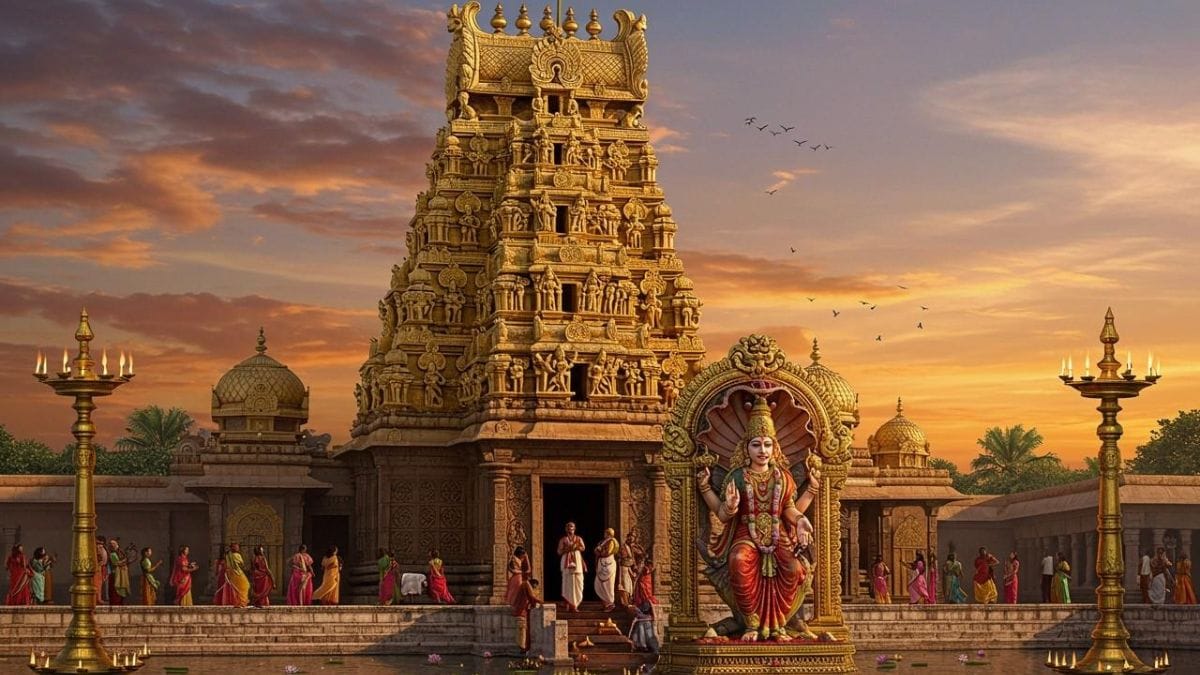
The architecture of South Indian temples follows the Dravidian style. This means tall, pyramid-like towers (called gopurams), wide courtyards, and intricate stone carvings that tell stories from Hindu epics.
Walk into any major temple in Tamil Nadu or Karnataka, and you’ll notice towering gopurams covered in brightly painted deities and mythical beasts. It’s art, religion, and culture rolled into one grand visual.
Some of the key features include:

| Element | Description |
|---|---|
| Gopuram | Towering entrance gateway |
| Mandapa | Pillared hall for prayers and gatherings |
| Garbhagriha | The inner sanctum housing the main deity |
| Vimana | Tower above the sanctum |
| Prakaram | Outer corridor for circumambulation |
Icons
Here are some must-visit temples in South India that reflect both grandeur and devotion:
- Meenakshi Temple (Madurai) – Known for its towering gopurams and 33,000 sculptures.
- Brihadeeswarar Temple (Thanjavur) – A UNESCO World Heritage Site with a 66-meter-tall vimana.
- Virupaksha Temple (Hampi) – Active for over 1,000 years and surrounded by ancient ruins.
- Ramanathaswamy Temple (Rameswaram) – Has the longest corridor among all Hindu temples.
- Chennakesava Temple (Belur) – Famous for its Hoysala-style carvings.
Each of these temples holds centuries of history, spiritual significance, and architectural excellence.
Devotion
Temples in South India aren’t just tourist spots—they’re vibrant centers of devotion. Daily rituals, music recitals, dance performances, and yearly festivals keep the spirit of bhakti (devotion) alive.

Take the Margazhi season in Tamil Nadu, for instance. The air is filled with classical music and temple chants. Or the Rath Yatras, where massive chariots pull deities through the streets while thousands gather in devotion.
For many, visiting these temples isn’t just a religious act—it’s a deeply personal journey of peace, prayer, and tradition.
Preservation
These temples have stood the test of time, but they also face modern-day challenges—pollution, urban encroachment, and lack of maintenance. Thankfully, organizations and governments are stepping in with conservation efforts and digital archiving.
There’s also a push to promote temple tourism, giving travelers a chance to explore these cultural gems responsibly.
South Indian temples are more than places of prayer—they’re spiritual magnets, architectural wonders, and timeless storytellers. Whether you’re drawn by faith or fascinated by history, visiting them leaves an impression that stays with you long after you’ve left the temple grounds.
FAQs
What is Dravidian temple architecture?
It’s a style with tall towers, stone carvings, and wide courtyards.
Which is the oldest South Indian temple?
The Kailasanathar Temple in Kanchipuram is one of the oldest.
Why are gopurams so tall?
They symbolize the spiritual path and attract devotees from afar.
Are South Indian temples still active?
Yes, most are active with daily worship and festivals.
Can non-Hindus visit these temples?
Some allow entry to all, but others may restrict access inside.