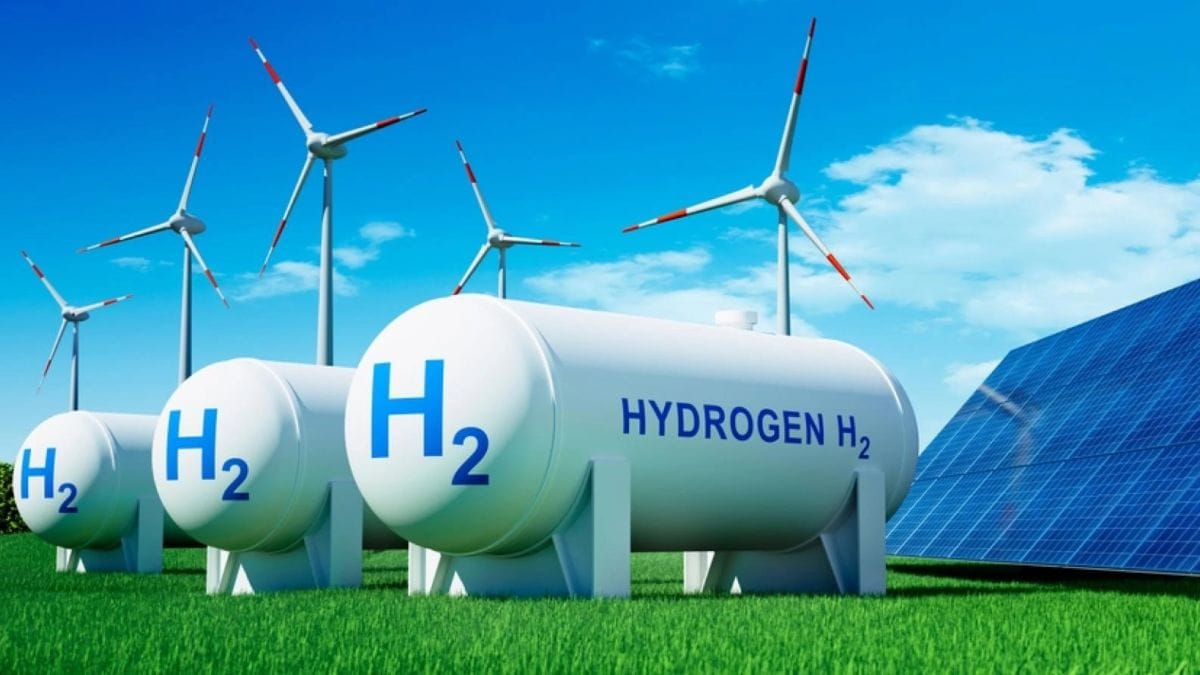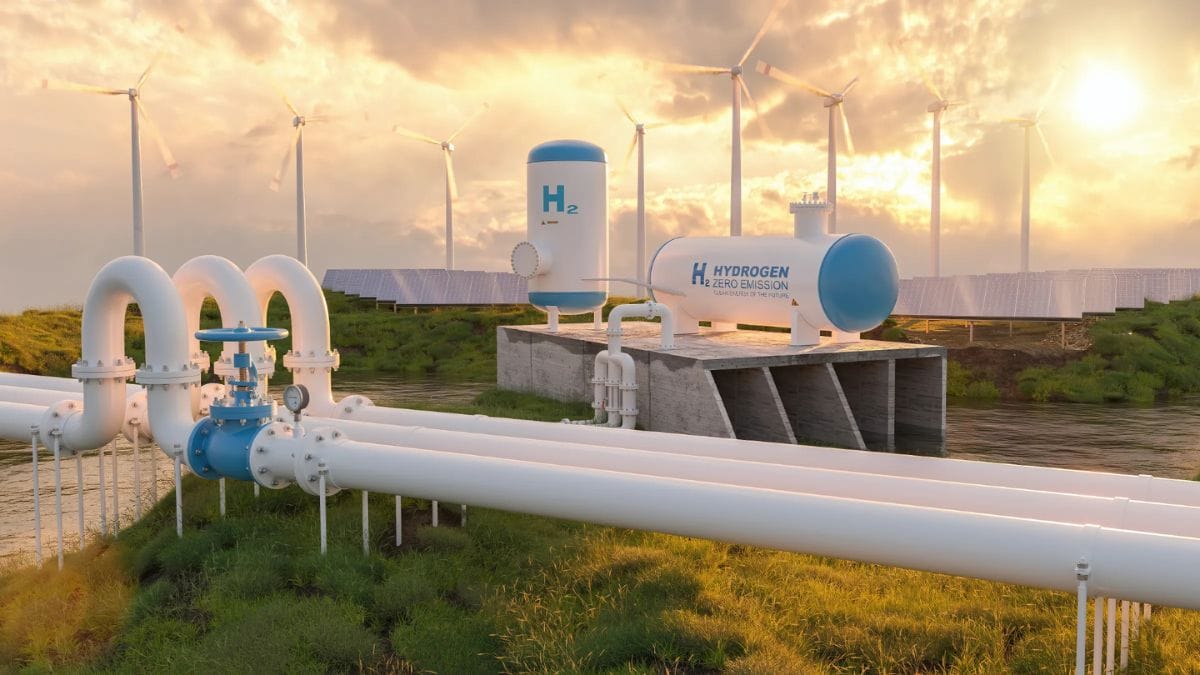
India is stepping into a cleaner and greener future, and at the heart of it lies the Green Hydrogen Mission. With climate change pushing the world to rethink energy, India has launched this mission to become a global hub for green hydrogen production.
But what exactly is green hydrogen? Why is it such a big deal? And how will this mission shape India’s energy landscape? Let’s break it down in plain language.
Basics
First things first — what is green hydrogen?

Hydrogen is the most abundant element in the universe, but it doesn’t exist freely on Earth. It must be extracted from compounds like water or natural gas. When it’s produced using renewable energy sources, like solar or wind, it’s called green hydrogen. It emits no carbon dioxide during production, making it a truly clean fuel.
So unlike grey or blue hydrogen, which involve fossil fuels and carbon capture, green hydrogen is all about zero emissions.
Mission
India officially launched the National Green Hydrogen Mission in January 2023, with a vision to make the country energy-independent and reduce reliance on fossil fuel imports. The mission is backed by an initial outlay of ₹19,744 crore, aiming to create a production capacity of 5 million metric tonnes (MMT) of green hydrogen per year by 2030.
It’s not just about cleaner air. The mission also targets job creation, technology development, and a huge cut in greenhouse gas emissions. Think of it as a clean energy revolution with a side of economic growth.
Goals
The government has laid out some pretty ambitious targets. Here’s a quick look at what the mission wants to achieve:
| Goal | Target by 2030 |
|---|---|
| Green Hydrogen Production | 5 MMT annually |
| Renewable Energy Capacity | 125 GW addition |
| Reduction in Carbon Emissions | 50 million metric tonnes |
| Investment | Over ₹8 lakh crore |
| Job Creation | Over 6 lakh jobs |
As you can see, it’s not just about energy — it’s a full-blown economic and environmental transformation.

Uses
Where can green hydrogen be used? Surprisingly, just about everywhere.
It can power fuel cell vehicles, especially in heavy-duty sectors like buses and trucks. It can also be used in industries like steel, cement, and fertilizers — all of which are tough to decarbonize.
Even shipping and aviation, two of the hardest sectors to clean up, could benefit from hydrogen-based fuels. Basically, if you can burn it or convert it to electricity, hydrogen can be part of the solution.
Benefits
So why is everyone so hyped about green hydrogen?
Here are some of the major benefits:
- Zero Emissions: It releases only water vapor when used.
- Energy Security: Reduces dependence on imported fuels like oil and gas.
- Industrial Use: Decarbonizes hard-to-abate sectors.
- Export Potential: India could become a top exporter of green hydrogen.
- Job Creation: Drives innovation, manufacturing, and clean tech employment.
Think of green hydrogen as the Swiss Army knife of clean energy — versatile, powerful, and green.
Challenges
Of course, it’s not all sunshine and solar panels. The path to green hydrogen has a few speed bumps.
- High Cost: It’s still more expensive than fossil-fuel-based hydrogen.
- Infrastructure Gaps: India lacks a nationwide pipeline or storage network.
- Technology Readiness: Electrolyzers and storage tech are still developing.
- Water Usage: Hydrogen production requires a lot of purified water.
- Policy Clarity: States need clear policies to attract investments.
The government is addressing many of these issues, but it’ll take time, money, and massive coordination.
Roadmap
The mission lays out a phased approach:
Phase 1 (2023–2026): Focus on pilot projects, building domestic electrolyzer capacity, and setting up R&D hubs.
Phase 2 (2026–2030): Full-scale production, global partnerships, infrastructure roll-out, and export strategies.
India also plans to offer incentives under schemes like Strategic Interventions for Green Hydrogen Transition (SIGHT), focusing on both production and electrolyzer manufacturing.
Global Push
India isn’t the only country eyeing green hydrogen. Nations like Germany, Japan, and Australia are also betting big on it. But India has a huge advantage — abundant sunshine, a growing renewables base, and a massive domestic market.
With smart planning, India could become a global supplier of green hydrogen, especially to energy-hungry nations looking to decarbonize fast.
Future
If all goes according to plan, India’s Green Hydrogen Mission could be a game-changer. It’s not just about reducing emissions — it’s about leading the energy race. From powering industries to creating clean jobs, this mission holds the key to a greener, more resilient India.
Sure, the road is long and full of challenges, but the destination? A cleaner planet, a stronger economy, and true energy independence.
FAQs
What is green hydrogen?
Green hydrogen is produced using renewable energy sources like solar or wind.
What is India’s target for green hydrogen?
India aims to produce 5 million metric tonnes per year by 2030.
What sectors will use green hydrogen?
Industries like steel, cement, transport, and shipping will benefit.
Why is green hydrogen important?
It helps cut emissions, boosts energy security, and creates jobs.
What are the challenges in green hydrogen?
High cost, tech gaps, water usage, and lack of infrastructure.