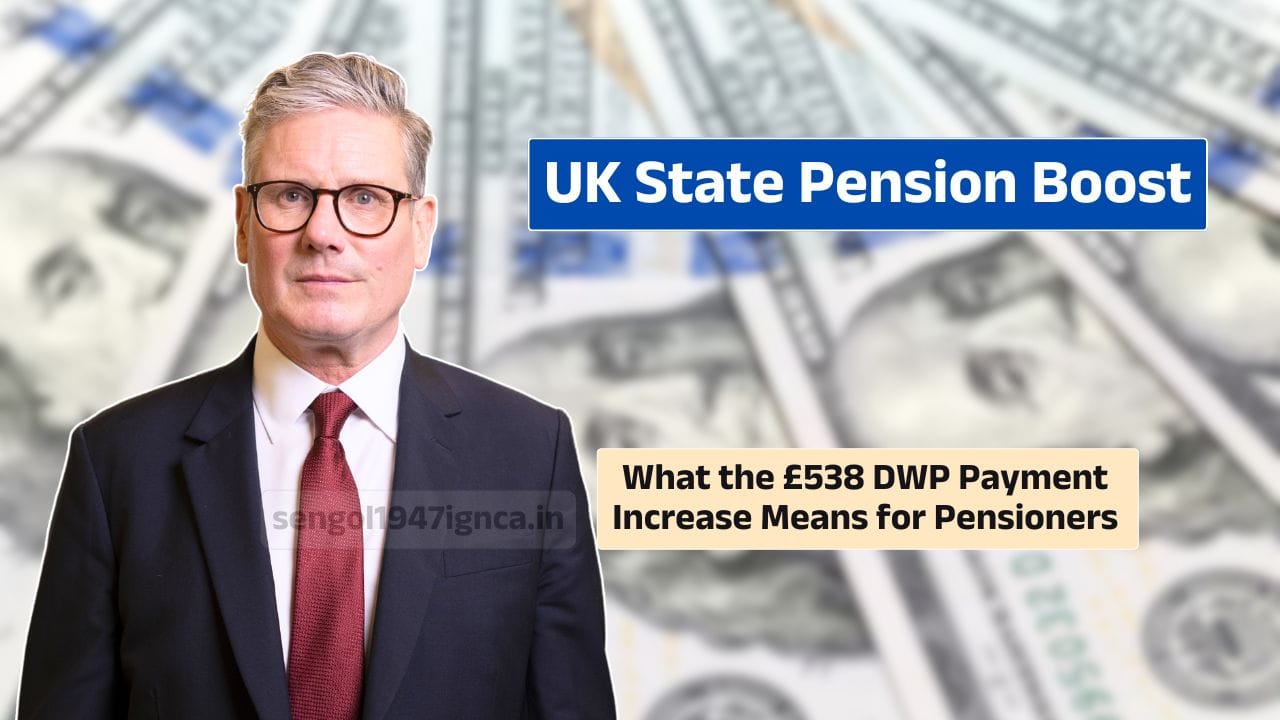
UK pensioners are set to benefit from a much-needed financial lift, with the Department for Work and Pensions (DWP) projecting an annual State Pension increase of up to £538.
For millions of retirees living on fixed incomes, this boost provides extra breathing space as household costs continue to climb. Let’s look into what this increase means, who qualifies, and how it fits into wider pension support.
Increase
The additional £538 per year will be applied from April 2026, following the 4.1% rise already delivered in April 2025. That increase took the new State Pension to £230.25 per week (around £11,973 annually). With the next uplift, retirees could see their annual payments climb to about £12,511.

The government’s triple lock guarantee ensures pensions rise each year, protecting pensioners’ spending power from inflation and rising wages.
Triplelock
The triple lock is simple but powerful. Each April, pensions increase by the highest of:
- Average UK earnings growth (measured May–July)
- Consumer Price Index (CPI) inflation (measured in September)
- A minimum of 2.5%
This rule prevents pensioner incomes from stagnating and ensures they don’t fall behind compared to working households.

Beneficiaries
Not all pensioners gain the same in pounds, though percentage increases are equal.
| Pension Type | Current Weekly Rate (2025) | Annual Value | Extra Annual Increase | New Annual Value (2026) |
|---|---|---|---|---|
| New State Pension | £230.25 | £11,973 | £538 | £12,511 |
| Basic State Pension | £176.45 | £9,180 | £361 | £9,541 |
Those who retired after April 2016 receive the new State Pension and therefore see a higher cash increase.
Eligibility
To benefit from the full increase, pensioners must:

- Have 35 years of National Insurance contributions (new State Pension) or 30 years (basic State Pension)
- Already be claiming their State Pension
- Receive payments through the UK system
Fewer contribution years mean reduced payments.
2025changes
The April 2025 adjustments already brought solid improvements:
- New State Pension: from £221.20 to £230.25 weekly (+£470 annually)
- Basic State Pension: from £169.50 to £176.45 weekly (+£361 annually)
These increases were automatic, with no action required by pensioners. The government spent £7.84 billion extra to make them possible.
Budget
An extra £538 may not sound huge, but for many pensioners it makes a big difference. The increase could cover:
- Energy bills for several months
- A year’s TV licence fees
- Broadband and phone bills
- Dental or optical expenses not covered by the NHS
- Essential home maintenance
Together with other benefits, some households may gain over £4,000 annually in additional support.
Support
Pensioners can also access several other schemes:
- Pension Credit: Boosts low incomes and opens access to perks like free TV licences and lower council tax.
- Winter Fuel Payment: From winter 2025/26, available again to all of pension age.
- Cold Weather Payments: £25 per week during qualifying cold snaps.
- Household Support Fund: Extended to March 2026 with £742 million to help cover essentials.
Tax
Most retirees stay under the personal allowance of £12,570. But with the increases, some who also have private pensions or part-time jobs may tip into taxable territory. Keeping track of combined income is important.
Abroad
Not every overseas pensioner will see the increase. Payments are “frozen” in countries without UK agreements, such as Canada or Australia. Pensioners living in the EU, USA, and other partner nations continue to get annual rises.
Safety
Scammers often take advantage of pension announcements. Keep in mind:
- The DWP never texts or emails asking for bank details.
- Pension increases are automatic.
- Report suspicious contact to Action Fraud.
Future
The government has confirmed the triple lock will stay until at least 2029. While the £538 figure is a projection, the actual increase in April 2026 will depend on wage growth and inflation. Since its introduction in 2011, the triple lock has significantly raised the real value of pensions.
Income
Although the State Pension helps, it rarely covers all retirement needs. The full new State Pension of around £12,000 a year falls short of the £14,400 estimated for a minimum retirement lifestyle. Retirees may want to supplement income through:
- Workplace pension schemes
- Private pensions with tax relief
- ISAs for tax-free savings
- Property or other investments
The £538 DWP payment increase offers pensioners real financial relief and builds on the April 2025 uplift. When combined with the triple lock and other support schemes, it provides stronger financial protection for retirees.
Still, relying solely on the State Pension is rarely enough for comfort. By planning ahead and investigating extra savings and benefits, pensioners can create a more secure and enjoyable retirement.
FAQs
When does the £538 boost begin?
It starts from April 2026 with State Pension payments.
Who qualifies for the new State Pension?
Anyone reaching pension age on or after 6 April 2016.
Is Pension Credit still claimable?
Yes, it supports low-income pensioners and adds perks.
Do pensioners abroad get the rise?
Only in countries with UK uprating agreements.
Do I need to apply for this rise?
No, increases are added automatically by the DWP.