Yoga isn’t just a modern fitness trend. Its roots run deep—thousands of years back into ancient Indian civilization. What began as a spiritual path to enlightenment is now practiced in gyms, homes, studios, and retreats around the world. But how did this ancient discipline transform into a global phenomenon? Let’s trace yoga’s fascinating journey from its sacred origins to its worldwide popularity.
Origins
Yoga began in ancient India over 5,000 years ago. Its earliest references appear in the Rigveda, one of the oldest known texts. Back then, yoga wasn’t about flexibility or physical strength. It was a spiritual practice meant to connect body, mind, and soul.
Later, around 200 BCE, the sage Patanjali compiled the Yoga Sutras, a set of guidelines that laid the foundation of classical yoga. These focused more on inner discipline, breath control, meditation, and moral values than just physical movement.

Philosophy
At its core, yoga is a philosophy—a way of life. It teaches balance, non-violence, truthfulness, contentment, and mindfulness. The physical postures, or asanas, are just one limb of the larger eight-fold path of yoga.
The eight limbs, according to Patanjali, are:
- Yama (moral codes)
- Niyama (self-discipline)
- Asana (posture)
- Pranayama (breath control)
- Pratyahara (withdrawal of senses)
- Dharana (concentration)
- Dhyana (meditation)
- Samadhi (absorption or enlightenment)
This holistic approach made yoga not just a practice but a journey of self-realization.

Spread
Yoga remained mostly within India until the late 19th and early 20th centuries. Spiritual leaders like Swami Vivekananda played a huge role in introducing it to the West. In 1893, he addressed the Parliament of the World’s Religions in Chicago, sparking curiosity about Indian spiritual practices.
Later, yogis like Paramahansa Yogananda and B.K.S. Iyengar traveled abroad and started teaching yoga. Slowly, it began attracting Western followers—not just for its philosophy but also for its health benefits.
By the 1960s and 70s, yoga became part of the counterculture in the West. Celebrities and influencers started promoting it, and it found a new identity—as both a spiritual and physical wellness system.

Modernity
Today’s yoga looks quite different from its ancient form. While some schools still focus on traditional practices, modern yoga often emphasizes flexibility, strength, stress relief, and fitness. There are now dozens of styles—like Hatha, Vinyasa, Ashtanga, Power Yoga, and even aerial and hot yoga.
Yoga studios exist in nearly every major city worldwide. Online classes, apps, and retreats have made it accessible to people from all walks of life.
In 2014, the United Nations even declared June 21 as International Day of Yoga, recognizing its global impact.
Impact
Yoga’s benefits go beyond physical fitness. Regular practice has been shown to reduce stress, improve mental health, increase focus, and boost overall well-being. It’s used in therapy, rehabilitation, schools, and even prisons.
Yet, with its rise in popularity, there’s also been concern about losing touch with its roots. Many traditional practitioners encourage blending the modern with the spiritual—keeping yoga’s heart while embracing its global reach.
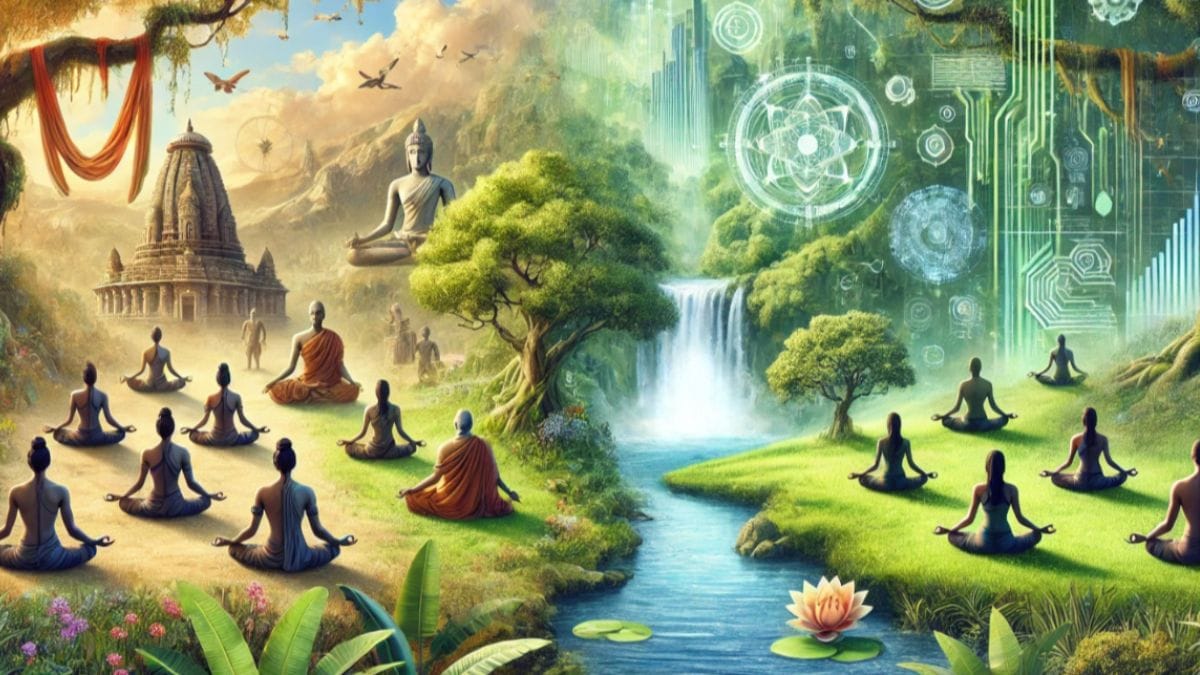
Yoga’s journey from ancient caves to global studios is nothing short of remarkable. It has stretched across cultures and generations, adapting and evolving while staying grounded in its purpose—to connect. Whether you’re on a mat in Mumbai or Manhattan, every pose traces back to a timeless pursuit of balance and peace.
FAQs
Where did yoga originate?
Yoga originated in ancient India over 5,000 years ago.
Who wrote the Yoga Sutras?
The sage Patanjali wrote the Yoga Sutras around 200 BCE.
When did yoga spread to the West?
Yoga began spreading to the West in the late 19th century.
What are yoga’s main benefits?
Yoga improves flexibility, reduces stress, and boosts focus.
What is International Yoga Day?
It’s celebrated on June 21 to honor yoga’s global impact.