India’s democracy is one of the largest and most vibrant in the world. But behind every election, from panchayat to parliament, there’s one constitutional body ensuring it all runs smoothly—the Election Commission of India. Ever wonder how our elections stay fair despite the chaos? Let’s walk through its history, powers, and recent reforms that keep the spirit of democracy alive and ticking.
History
The Election Commission of India (ECI) was established on 25th January 1950, just before India’s first general election. This date is now celebrated as National Voters’ Day. Initially, it had only one Chief Election Commissioner (CEC), but in 1989, it was expanded to include two more Election Commissioners.
The idea was to create a body that’s neutral and independent—one that can’t be swayed by politics or pressure. Article 324 of the Indian Constitution gave the ECI this authority, making it a guardian of free and fair elections.

Over the decades, the ECI has conducted national, state, and local elections with increasing efficiency, despite the growing voter base and political complexity.
Powers
So what can the Election Commission actually do? A lot, actually. Its powers are not just administrative but also quasi-judicial. Here’s a quick breakdown:
| Area | Power Description |
|---|---|
| Election Scheduling | Decides election dates and phases independently |
| Code of Conduct | Enforces Model Code of Conduct during elections |
| Candidate Scrutiny | Verifies nominations and disqualifies ineligible candidates |
| Political Party Rules | Registers and regulates political parties |
| Electoral Roll | Prepares and updates voter lists regularly |
| Election Symbols | Allots symbols to recognized political parties |
| Re-poll Orders | Can cancel or re-conduct elections in case of malpractice |
The Commission also has the authority to ask for reports from poll officers, send observers, and even take action against state machinery if it tries to influence the polls.
Structure
The current structure includes the Chief Election Commissioner and two Election Commissioners. All three have equal powers and responsibilities. They are appointed by the President of India, usually for a tenure of six years or until they turn 65.
Decisions are taken by majority vote, and the Commission operates as a unit rather than under a single individual. This collective model reduces bias and adds balance to the process.
Challenges
Despite its powers, the Election Commission isn’t without its challenges. Political pressure, fake news, paid news, voter manipulation, and misuse of social media have made election monitoring tougher.
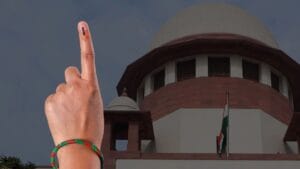
There’s also criticism about how the CEC and Election Commissioners are appointed—currently, it’s solely by the government, raising concerns about neutrality. Delays in acting against violators and uneven application of rules have also attracted public scrutiny.
Reforms
To stay effective, the ECI has been pushing several reforms. Some of them are already in place, while others are still proposed. Here’s a look:
| Reform Area | Key Changes |
|---|---|
| Voter ID Linking | Linking Aadhaar to voter ID to eliminate duplicates |
| Remote Voting | Developing tech for migrant workers to vote remotely |
| Transparent Funding | Push for cleaner political funding and donor transparency |
| Digital Campaign Rules | Draft rules to manage fake news and hate speech online |
| Appointment Process | Proposal for an independent committee to appoint CEC/ECs |
These reforms aim to make the electoral process more secure, inclusive, and transparent, especially as technology plays a bigger role in campaigning and voting.
Importance
The Election Commission plays a central role in keeping Indian democracy strong. Without it, elections could become chaotic and unfair. It ensures that every citizen, no matter how rich or poor, has a voice. Its functioning directly affects the quality of leadership and governance in the country.
As India’s population and political competition grow, the role of the ECI becomes even more crucial. With the right reforms and public support, it can continue being the watchdog our democracy needs.
FAQs
When was ECI formed?
It was established on 25th January 1950.
Who appoints the CEC?
The President of India appoints the Chief Election Commissioner.
What does ECI do during elections?
It manages scheduling, rules, monitoring, and results.
What reforms are being considered?
Aadhaar linking, remote voting, and cleaner funding rules.
How many Election Commissioners are there?
Three—one Chief and two Election Commissioners.