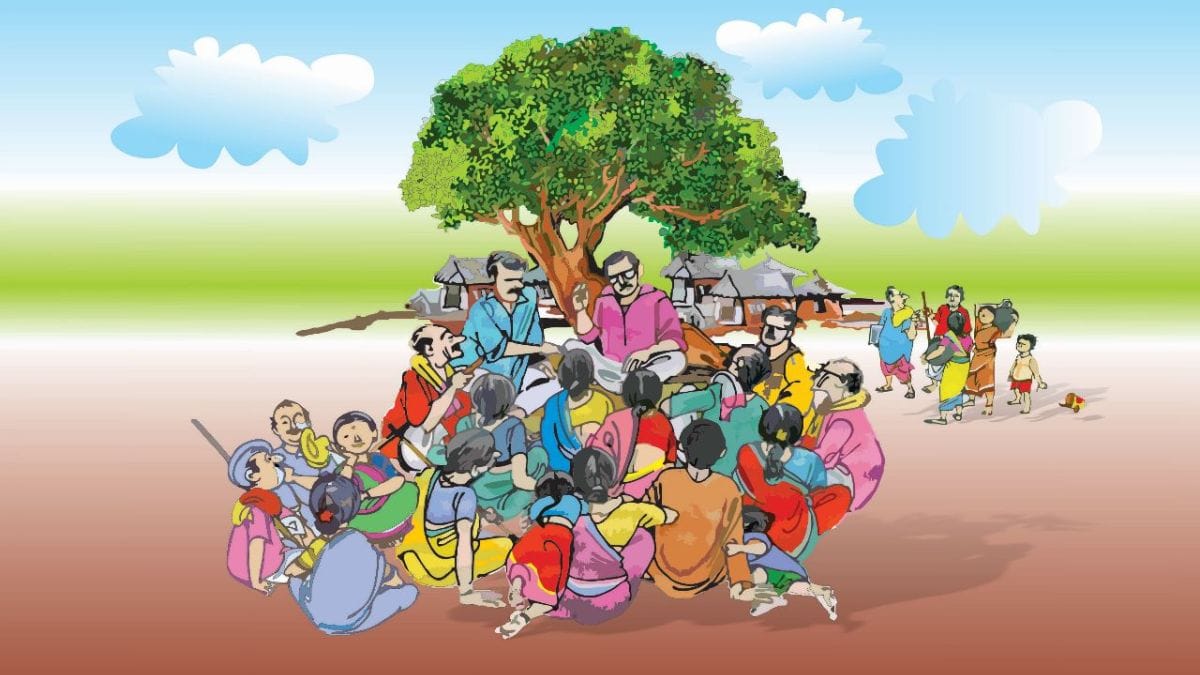
When we think of governance, we often picture parliaments and ministers. But in India, real democracy begins much closer to home—in villages. That’s where the Panchayati Raj system comes in. It’s the backbone of local self-governance, bringing power to the people right at the grassroots level. Introduced to make administration more accessible and accountable, the Panchayati Raj has reshaped how India’s rural population participates in democracy.
Concept
The word “Panchayat” comes from Sanskrit, meaning a council of five elders. Historically, villages in India settled disputes and made decisions through local councils long before formal governments existed.
The modern Panchayati Raj system is rooted in this idea. It gives rural citizens a voice in decision-making, planning, and local development. It’s a three-tier system designed to decentralize power and improve governance where it’s needed most—at the village level.

Structure
The Panchayati Raj system operates through three levels:
- Gram Panchayat – Village level
- Panchayat Samiti – Block or intermediate level
- Zila Parishad – District level
Each level has elected representatives. The Gram Sabha, made up of all adults in a village, is the foundation. It meets to approve plans, budgets, and policies, ensuring transparency and public participation.
Here’s a quick breakdown:
| Level | Governing Body | Area Covered |
|---|---|---|
| Village | Gram Panchayat | Single village |
| Block | Panchayat Samiti | Group of villages |
| District | Zila Parishad | Entire district |
Constitutional Status
While Panchayats existed informally for centuries, it was the 73rd Constitutional Amendment Act of 1992 that gave them legal status. This amendment added Part IX to the Constitution and introduced the Eleventh Schedule, listing 29 subjects under Panchayati Raj jurisdiction.
Key features include:
- Regular elections every five years
- Reservation for Scheduled Castes, Scheduled Tribes, and women (33%)
- Power to prepare plans for economic development and social justice
- State Finance Commissions to recommend financial distribution
This amendment made decentralization a constitutional mandate, not just a policy choice.

Functions
Panchayats manage a wide range of local issues. Their responsibilities vary from state to state but generally include:
- Maintenance of roads, water supply, and sanitation
- Implementation of government schemes
- Management of primary education and healthcare
- Promotion of agriculture, small industries, and rural employment
- Dispute resolution and social welfare activities
Their power isn’t just administrative—it’s participatory. People are directly involved in decision-making through Gram Sabhas, creating a strong foundation for democracy.
Challenges
Despite its importance, the Panchayati Raj system faces hurdles:
- Limited financial autonomy
- Political interference
- Lack of trained personnel
- Gender and caste-based barriers
- Inadequate infrastructure and awareness
Some Panchayats depend heavily on state governments for funds and guidance, which weakens local decision-making.
Still, there are many success stories. States like Kerala and Karnataka have shown how effective decentralization can be with proper support and citizen participation.
The Panchayati Raj system is one of India’s most powerful democratic tools. It brings governance to every doorstep, encourages participation, and ensures that rural voices aren’t just heard—they’re empowered. With the right reforms and community involvement, it can truly transform local governance and uplift millions across rural India.
FAQs
What is Panchayati Raj?
It’s a three-tier local governance system in rural India.
When was it constitutionally established?
It was established in 1992 through the 73rd Amendment.
What is the Gram Sabha?
It’s a body of all adult villagers who approve Panchayat decisions.
How many levels does it have?
It has three levels: village, block, and district.
Is there reservation in Panchayats?
Yes, for SCs, STs, and one-third seats for women.